Black ground
Matte black is the paper. Color sits in it. Do not mix the black to grey. Do not fill every gap — the field has to remain visible around the cells and eyes.
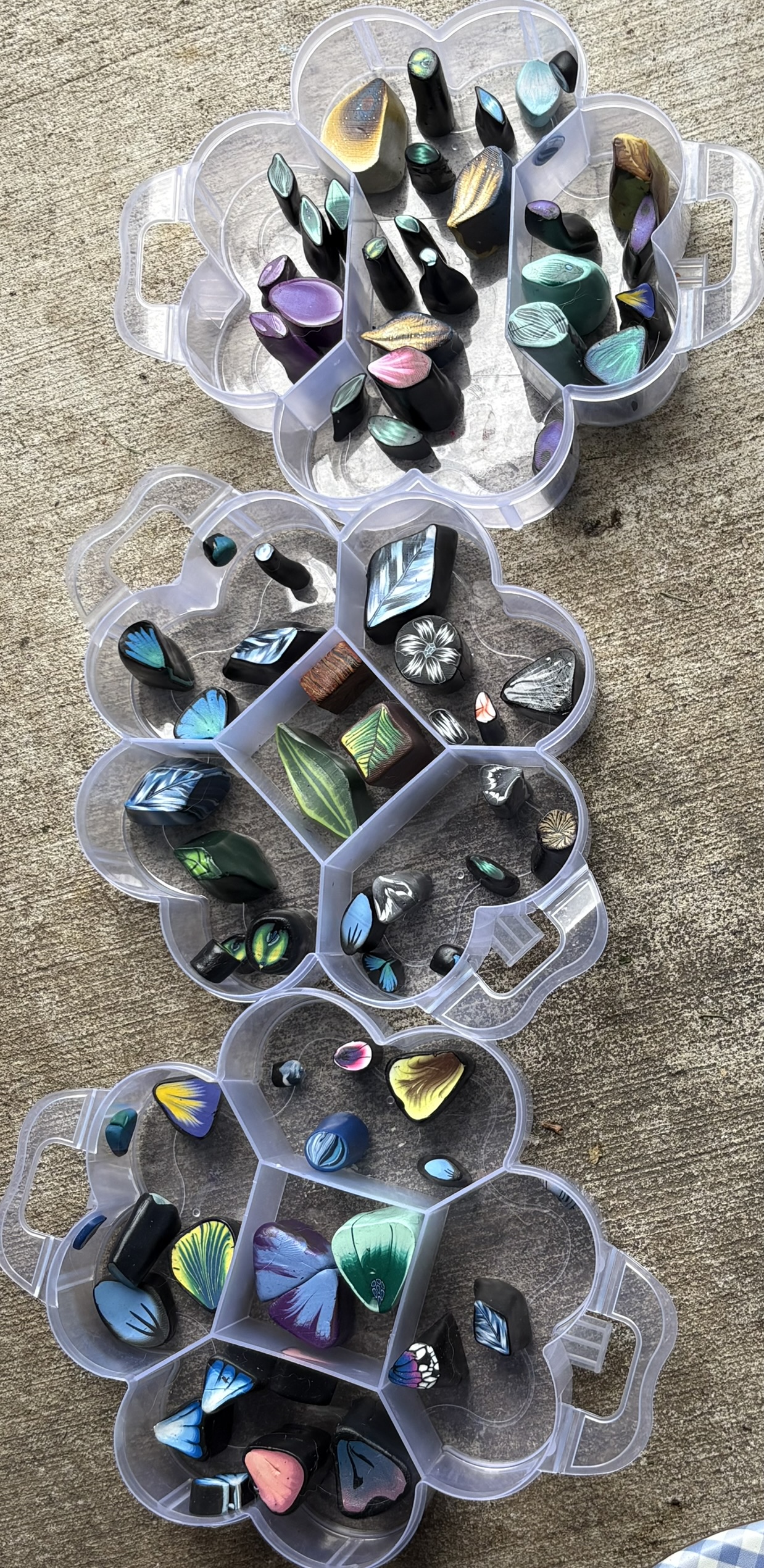
These come off the jewelry, not a bird poster. If a slice does not show at least three of them, it is not this class.
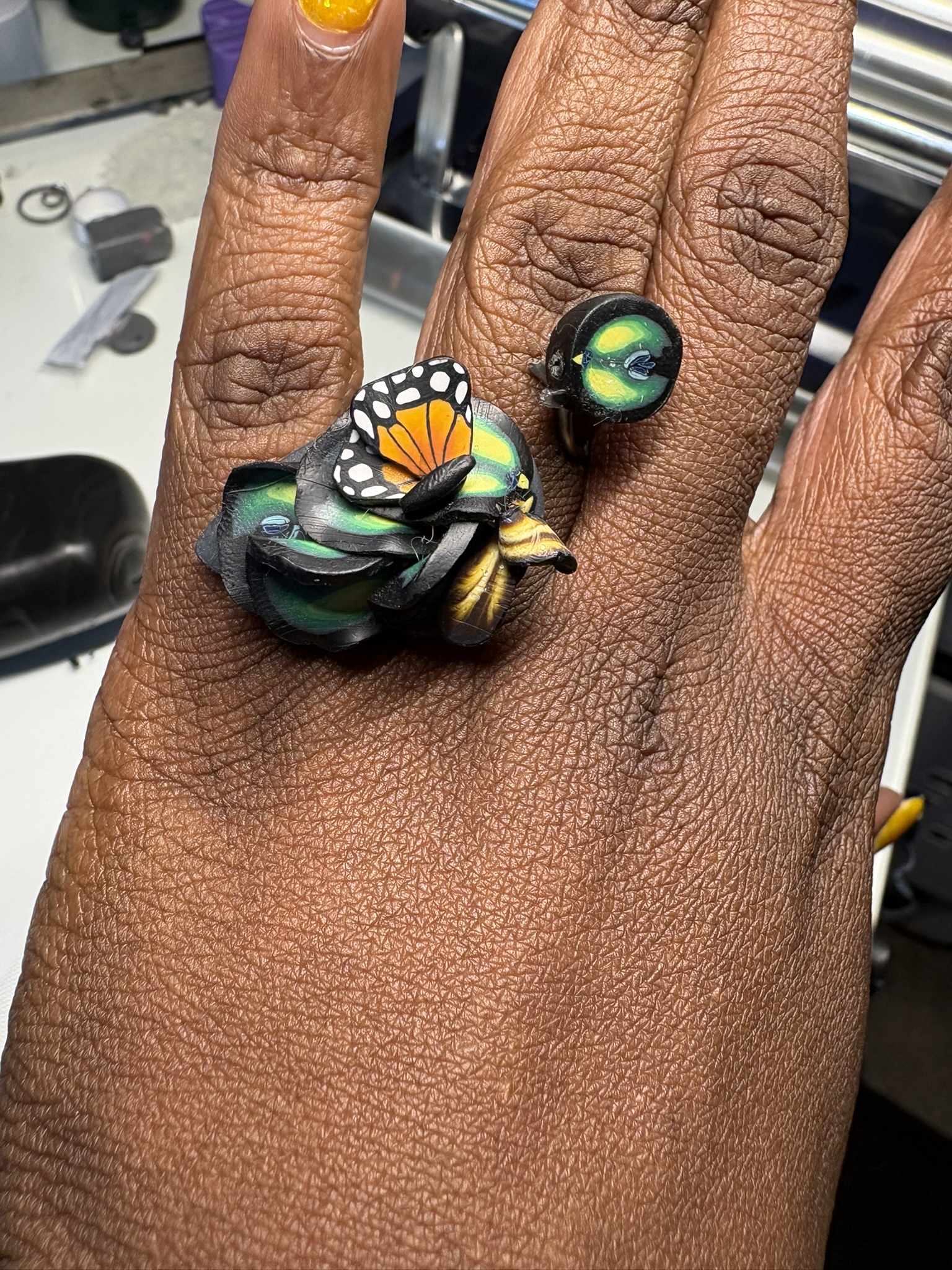
Matte black is the paper. Color sits in it. Do not mix the black to grey. Do not fill every gap — the field has to remain visible around the cells and eyes.
A Skinner blend is a value story, not a rainbow. Monarch path: orange into rust. Eye path: yellow into lime. Pearl and gold are a hairline or a fleck, never the cane.
Same architecture on a feather and on a monarch wing: parallel cells split by thin black veins, then a leading edge. Readable lines beat a muddy plug.
Concentric oval — yellow core, lime ring, black wrap. Pinch it oval. Field marks are not perfect circles. This is the disc on the middle finger.
Tiny white snakes along the outer black edge. That is the monarch border and the “field mark” that makes a wing read as a wing from across the table.
Thin slices stacked like scales, points out, black still showing. One graphic disc + one cluster is the sister pair. A 14-piece bird silhouette is not this work.
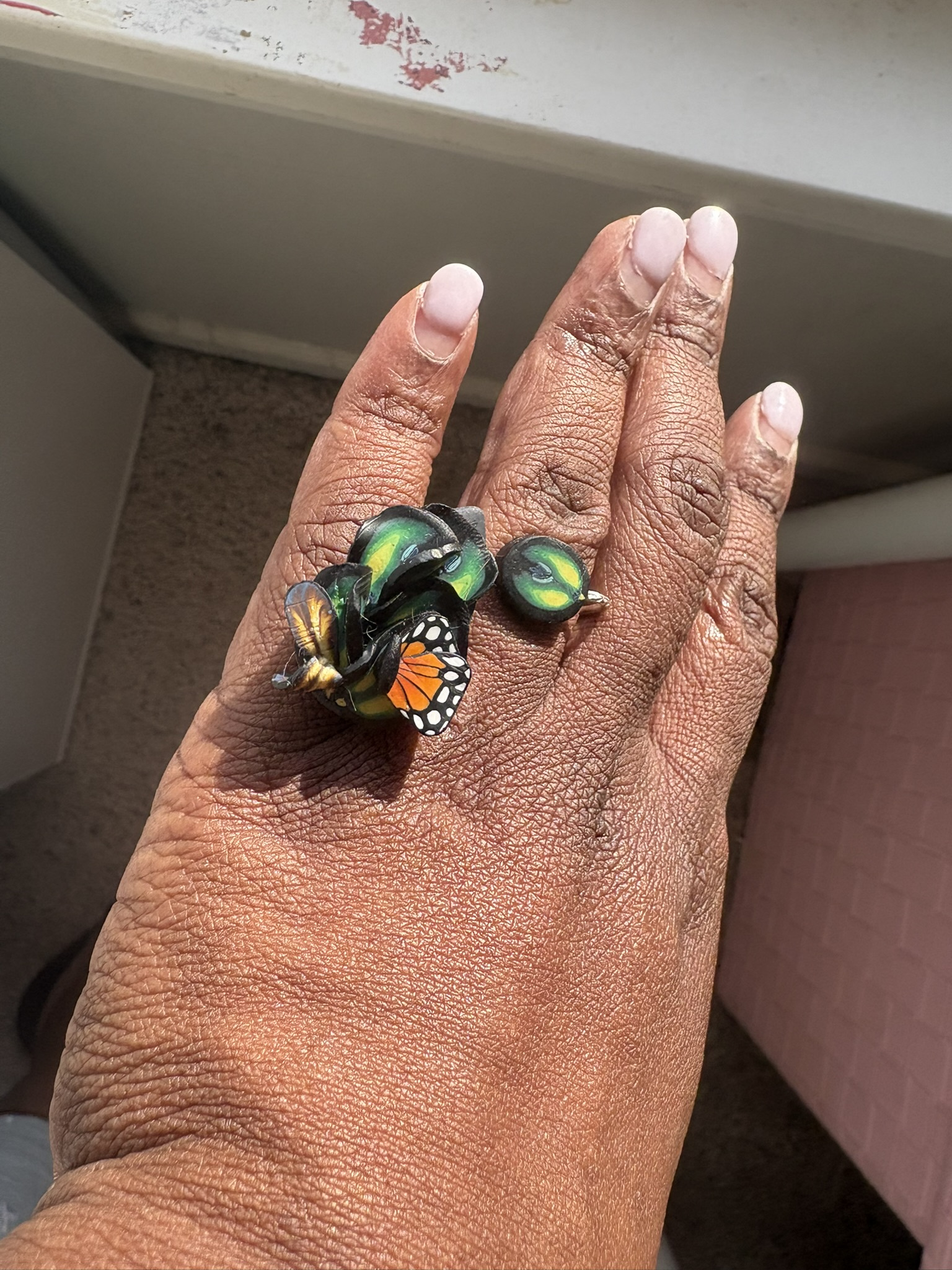
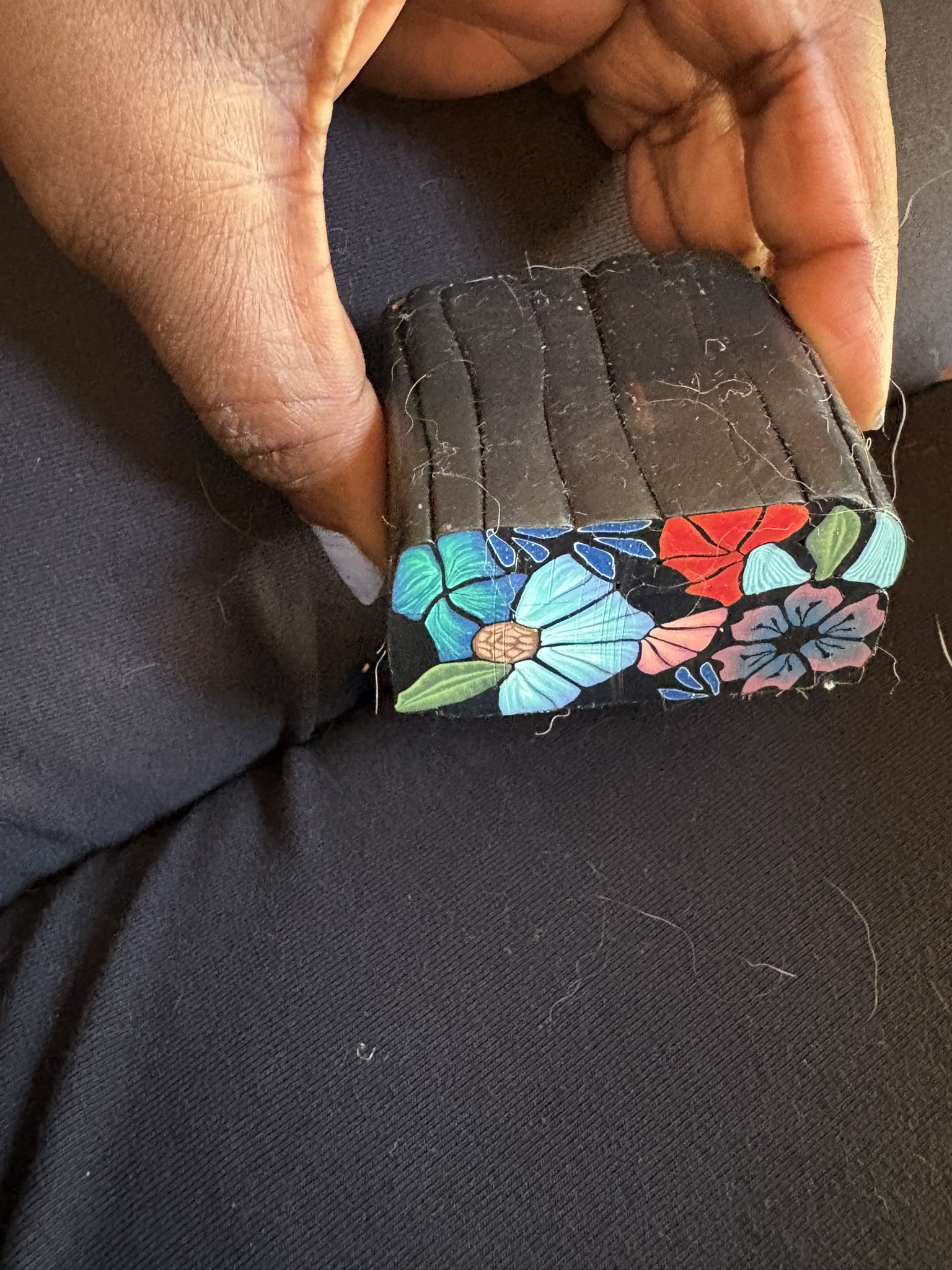
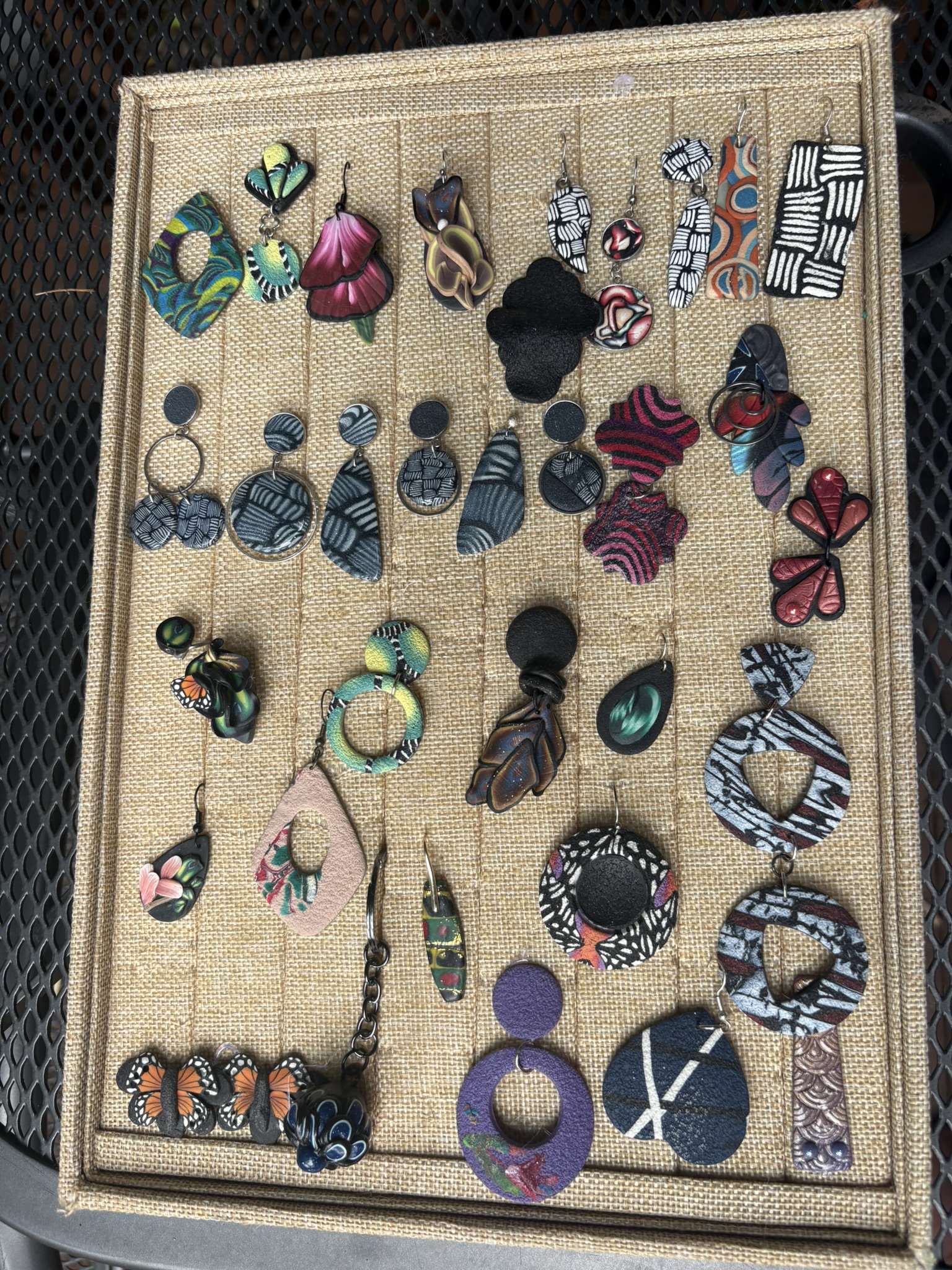
Students are not copying a monarch sculpture in class 01. They are learning the grammar those pieces are built from: field, vein, eye, tick, overlay.
Orange Skinner, black veins, white ticks, black wrap. Slices read as wing scale.
Yellow core, lime wrap, black field, pinch to oval. Slices read as the disc ring.
Class 02 puts both on the same tile and overlays them the way the statement ring is built. Class 03 is the sister pair: one disc, one cluster, optional small monarch on top.